You've cleaned the fish, packed the esky, hosed down the deck. Hours later you're eating dinner and your hands still smell like the boat ramp. This happens to everyone who fishes, and there's a reason regular soap barely touches it.
Why Fish Smell Sticks Around
Fish slime, blood and gut oils don't just sit on top of your skin, they work their way into the fine creases around your knuckles, under your nails and into the natural oils on your hands. Regular soap is built to lift everyday dirt and grease off the surface. It's not built to pull odour out of skin, so a lot of the smell just gets moved around rather than actually removed.
The other factor is time. The longer fish residue sits on your hands before you wash properly, the more it binds to your skin. A quick rinse an hour after you've finished cleaning the catch does a lot less than washing properly the moment you're done.
Wash As Soon As You're Done, Not When You Get Home
The single biggest factor in whether the smell lingers is timing. If you've got any way to wash your hands properly at the boat ramp, in the tinnie, or at the cleaning table, do it before the smell has a chance to set in. Waiting until you're home an hour later means you're fighting a much tougher job.
If you're land-based or on a boat without a proper wash setup, at minimum rinse thoroughly with water and give your hands a solid scrub with whatever soap you've got, then follow up properly once you're home.
Don't Forget Your Nails and Knuckles
Most of the lingering smell hides in three places: under the nails, in the creases of your knuckles, and around the cuticles. A flat scrub across your palms misses all three. Use a nail brush if you've got one, or work a bar of soap directly into those areas with your thumbnail rather than just lathering your palms and calling it done.
What Regular Soap Can and Can't Do
Regular soap is genuinely fine for everyday use, and there's no need to overcomplicate washing your hands after a normal day. But it's designed around lifting light dirt and oil off the surface of the skin, not pulling embedded odour out of it. That's why you can wash your hands three times with the bathroom hand wash and still smell fish an hour later, the smell isn't sitting on the surface anymore, it's in the skin.
This is where a soap with actual grit and an absorbent ingredient in it earns its keep. Pumice physically scrubs the surface layer where residue is trapped, and something like activated charcoal is genuinely good at drawing odour out rather than just masking it with fragrance.
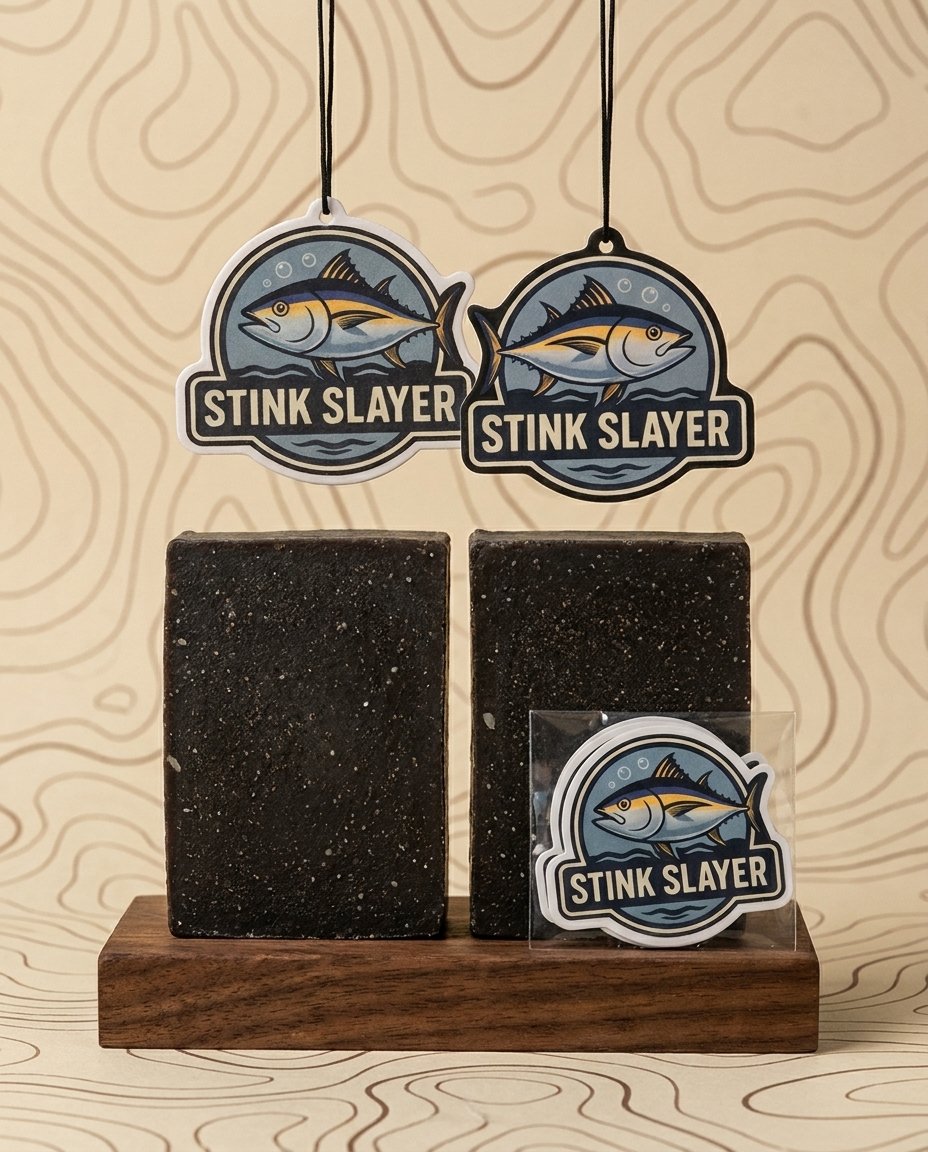
Stink Slayer bars use activated charcoal, pumice grit and coffee grounds together, charcoal to pull odour out, pumice to physically scrub away what's stuck, and coffee to neutralise what's left rather than cover it with perfume. See exactly what's in it and why →
Wet Wipes and Hand Sanitiser Won't Cut It
Worth saying plainly: hand sanitiser kills germs, it doesn't remove residue or odour. Wet wipes shift some surface grime but don't have the mechanical scrubbing power to get into creases and under nails. Both are fine as a stopgap between a proper wash, but neither is a substitute for actually washing your hands with soap and water.
After a Big Clean-Up Session
If you've just filleted a solid catch, expect to need more than one wash. Do a first pass to get the bulk of the blood and slime off, then a second, slower wash focusing on nails and knuckles once the worst of it is gone. Trying to do it all in one rushed wash is how the smell ends up lingering into the evening.