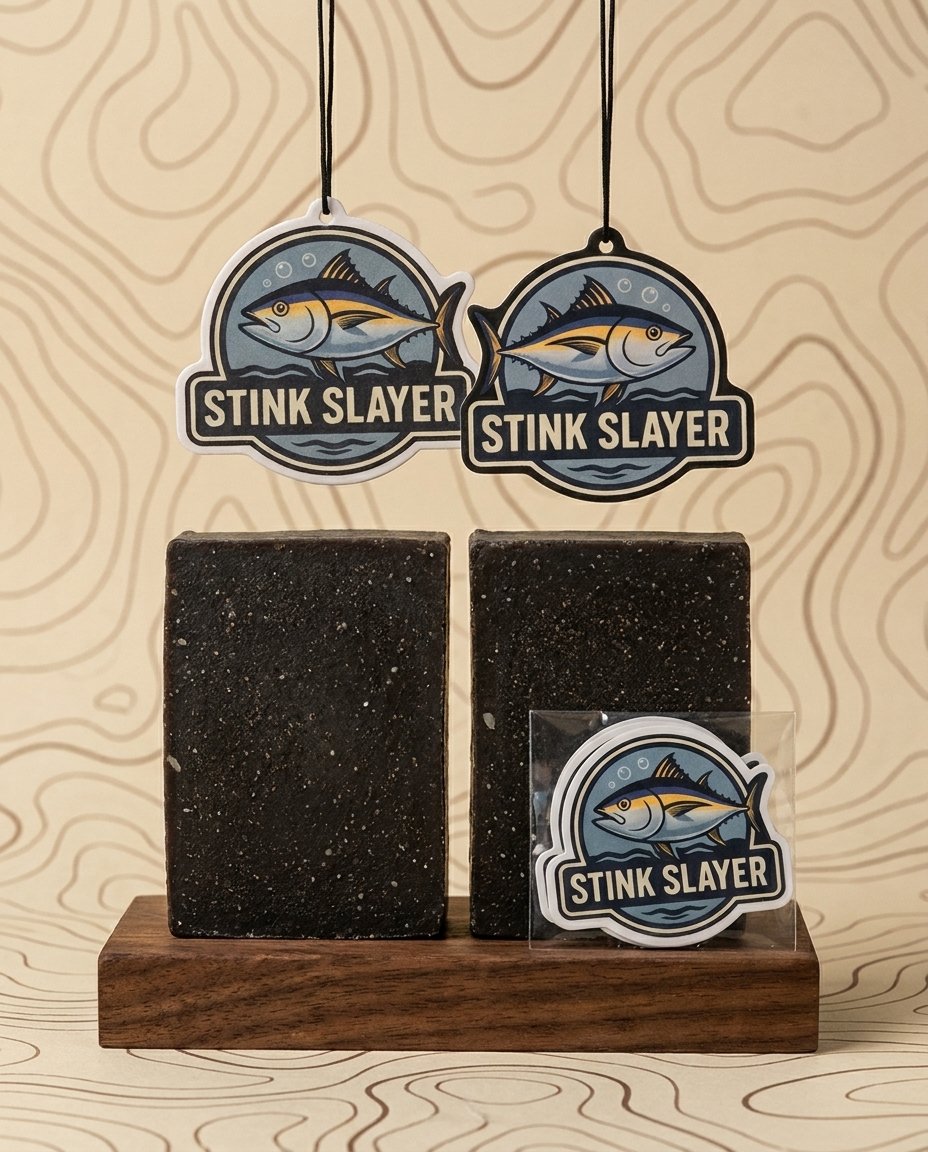
If you've ever pulled a pilchard out of the packet, rigged it, then gone to eat your lunch, you already know: bait smell is its own category of problem. It's not the same as fish slime off a catch, it's oilier, it's usually been sitting in brine or freezer juice, and it gets on your hands over and over across a session, not just once at the end.
Why Bait Is Worse Than the Fish Itself
Most bait is either oily (pilchards, bonito strips), briny (prawns straight out of the packet) or just naturally pungent (squid, especially once it's been sitting out). Unlike handling your actual catch, which usually happens once or twice a trip, bait handling happens constantly, every re-rig, every re-bait, every change of hook. That repetition is what makes bait smell so hard to shake, you're re-applying it to your hands all session long.
Berley is its own beast. Commercial berley mixes and pilchard-based berley trails are designed to put a strong scent into the water, which means they're also going to put a strong scent on whoever's mixing and dispensing it.
Minimise Contact Where You Can
Small practical changes make a real difference before you even get to washing:
- Use bait scissors or pliers to handle strips where the rig allows it, rather than pinching bait directly with your fingers every time.
- Keep a separate bait hand if you can, use one hand for baiting and the other for handling rods and gear. It won't eliminate the smell but it stops it spreading to everything you touch.
- Rinse between baits, not just at the end. A quick dunk and rub in the water after rigging keeps residue from building up layer on layer across a session.
Dealing With Squid and Prawn Residue Specifically
Squid ink and prawn shell residue tend to get right into the grooves of your fingerprints and under your nails in a way that's genuinely stubborn. A plain water rinse won't shift it. You need actual friction, rubbing your hands together properly with soap, particularly across the fingertips and around the nail beds, not just a quick lather-and-rinse.
Wash Properly at the End of the Session, Not Just During
Rinsing between baits keeps things from getting worse through the day, but you still need a proper wash once you're done. By the end of a session your hands have had oils, brine and berley layered on repeatedly, that needs more than a rinse to shift.
Same principle as any smell that's worked into the skin, use a soap with actual scrubbing texture (not just a smooth bar), work it into your nails and knuckles, and don't rush it. Two proper washes, one to shift the bulk of it and one to finish the job, beats one rushed effort every time.
If you don't have fresh water on board, a bar of soap still works fine with seawater, it just won't lather quite as much. Keep one in the tackle box or esky rather than relying on hand sanitiser, which does nothing for bait oil or smell.