Activated charcoal shows up in soap, toothpaste, water filters and even hospital emergency treatment. That's a wide spread of uses, which either means it's a genuinely useful material or a very well-marketed one. It's worth understanding what it actually does before deciding which.
What Activated Charcoal Actually Is
Activated charcoal is carbon that's been processed to be extremely porous, covered in tiny pits and crevices at a microscopic level. That massive internal surface area is what gives it its main property, adsorption, meaning things stick to its surface rather than passing straight through or past it. It's the same basic material hospitals use to treat certain kinds of poisoning, by binding substances in the gut so they can't be absorbed.
What That Means In a Bar of Soap
In soap, that same adsorption property means activated charcoal can bind oils, residue and odour-causing compounds on the surface of your skin, effectively giving them somewhere to stick other than your hands. It rinses away carrying some of what it's picked up with it. This is a different mechanism to a scrub like pumice, which works by physically abrading dirt off, or a fragrance, which just masks smell rather than removing anything.
It's also worth knowing charcoal isn't a disinfectant or an antibacterial agent on its own, its job in soap is drawing out oil and odour, not killing germs. That's a separate function handled by basic soap chemistry and, in Stink Slayer's case, essential oils with natural antimicrobial properties.
Why It's Dark, Not Because of Dye
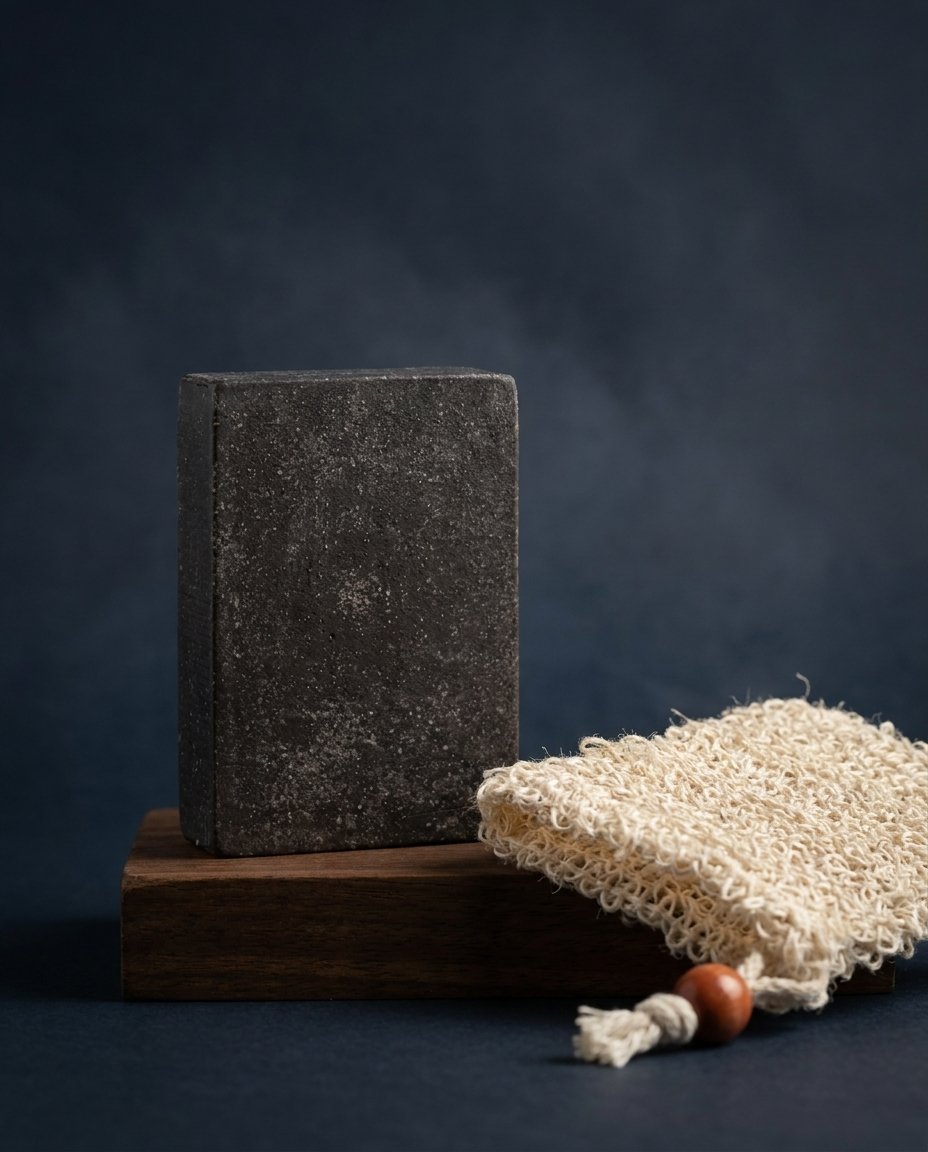
Charcoal soap is black or dark grey because that's the actual colour of activated charcoal, not because of an added colourant. If you see a "charcoal soap" that's pure white or brightly coloured, it's worth asking how much actual charcoal is really in it.
Does It Actually Make a Difference?
For everyday clean hands, probably not noticeably, regular soap will do the job fine. Where it earns its place is on genuinely dirty or smelly hands, after fishing, after workshop grease, after anything that's left oil or odour worked into your skin rather than sitting on the surface. That's the specific job it's suited to, not a general miracle ingredient for all soap.
Stink Slayer bars combine activated charcoal with pumice grit for physical scrubbing and coffee grounds to neutralise odour, three ingredients each doing a distinct job rather than charcoal alone carrying the whole bar. See the full ingredients breakdown →